If Earth Spun Twice as Fast, Days Would Be 12 Hours
Cosmic What-Ifs150 views
512 views
Black holes themselves are freezing cold. But the gas falling into one is some of the hottest matter in the universe.
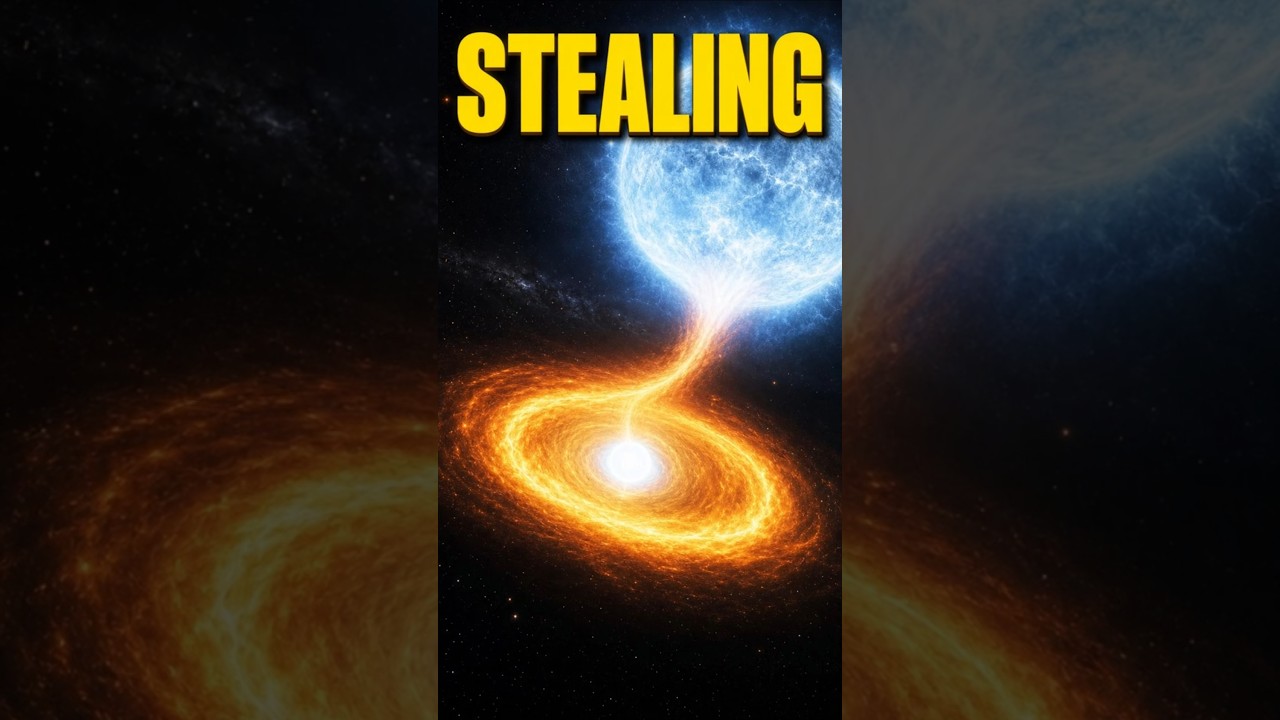
As a black hole feeds, it pulls in gas and dust that spiral inward, faster and faster, forming a flattened, glowing ring called an accretion disk.
As that material spirals in, it gets squeezed and sheared, and friction heats it to staggering temperatures. The inner edge of the disk can blaze at millions of degrees Celsius, hot enough to glow not in visible light, but in X-rays. Just above the disk sits a region called the corona, where gas can reach over a billion degrees. These feeding black holes power quasars, the brightest steady objects in the cosmos, visible across billions of light-years.
Here's the twist. The black hole itself emits almost nothing. The blazing heat and light come entirely from matter that hasn't fallen in yet. The hottest glow in the universe marks the edge of total darkness.
Follow The Cosmic Vault — the universe is stranger than you think.